If you’re planning a bathroom renovation, one of the first questions you may ask is: What is the most expensive part of a bathroom remodel?
There is no single answer for every project. In a typical bathroom renovation, the shower or tub area, plumbing changes, tile and waterproofing, and professional labor can account for a large share of the budget. If you change the bathroom layout, moving plumbing can become one of the biggest expenses. If you’re building a custom walk-in shower, the wet area may become the most expensive part of the project.
The key is understanding what makes each part expensive before you start.
At AZ Bath Remodeling, we believe homeowners should know what they are paying for before remodeling work begins. Whether you’re making a few updates or completely changing your bathroom, understanding the major cost drivers can help you plan a project that fits your space and priorities.
What Is the Most Expensive Part of a Bathroom Remodel?
The most expensive part of a bathroom remodel depends largely on what you are changing.
For a bathroom that keeps the existing layout, the shower or tub area can become a major expense because it may involve demolition, plumbing, waterproofing, tile, fixtures, and glass or enclosure work.
For a bathroom where the layout is changing, plumbing and related construction work can significantly increase the budget. Moving a toilet, shower, bathtub, or sink can require changes behind walls or beneath the floor.
Professional labor is another major cost because a bathroom remodel may involve several specialized trades, including plumbing, electrical work, tile installation, carpentry, waterproofing, and fixture installation.
The biggest bathroom remodeling cost factors include:
- Shower or bathtub renovation
- Plumbing and drain relocation
- Waterproofing
- Tile and tile installation
- Electrical and lighting changes
- Vanity and cabinetry
- Flooring
- Fixtures and hardware
- Demolition and preparation
- Professional installation and labor
So rather than asking which single item is always the most expensive, it is more useful to ask which parts of your specific bathroom require the most work.
Why the Shower or Tub Area Can Be So Expensive
The shower or bathtub area often combines several different types of work into one part of the bathroom.
A new shower may require:
- Demolition of the existing shower or tub
- Plumbing modifications
- A properly prepared shower base or pan
- Waterproofing
- Wall preparation
- Tile installation
- Shower fixtures
- Glass doors or an enclosure
- Built-in niches or benches
- Finishing and sealing
This is why a shower renovation can cost considerably more than simply replacing a bathroom fixture.
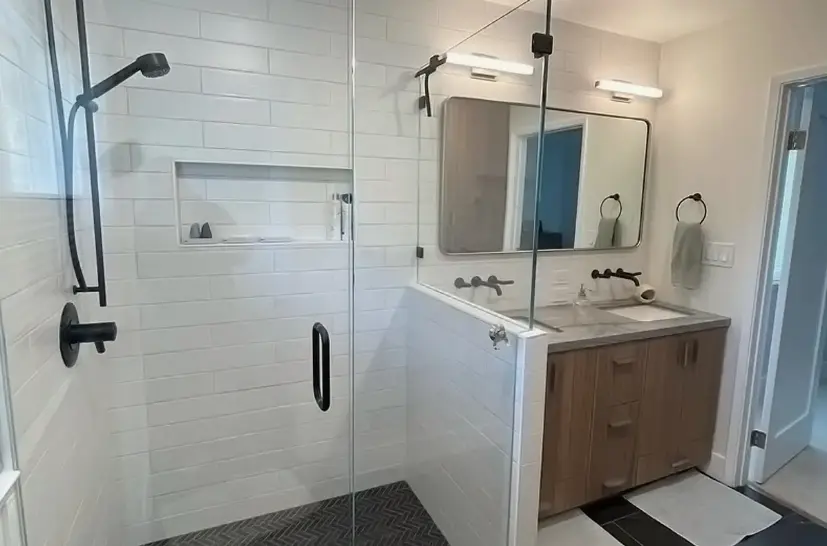
A basic tub replacement and a custom walk-in shower are also very different projects. A custom shower with multiple fixtures, large-format tile, a bench, recessed niche, frameless glass, or a curbless entry requires more planning and installation than a straightforward replacement.
Plumbing and Layout Changes Can Drive Up Remodeling Costs
Changing the location of bathroom fixtures is one of the decisions that can have a major effect on the remodeling budget.
For example, keeping the toilet, sink, and shower in approximately the same locations may require less plumbing work than moving them to completely different areas.
Moving plumbing can involve:
- Opening walls or floors
- Relocating water supply lines
- Moving drain lines
- Adjusting venting
- Repairing surfaces after plumbing work
- Additional labor and materials
- Potential permit or inspection requirements
This doesn’t mean you should never change your bathroom layout. A poorly designed bathroom may benefit significantly from a new arrangement. The important thing is to understand the additional work before deciding.
Is Keeping the Existing Bathroom Layout Cheaper?
Often, yes.
Keeping plumbing fixtures in their existing locations can reduce the amount of demolition and plumbing work required. However, the best layout for your bathroom should depend on functionality, available space, storage, accessibility, and your long-term goals.
A small amount of additional remodeling work may be worthwhile if it creates a much more functional bathroom.
Tile and Waterproofing Are More Than Just Finishes
Tile is one of the most visible parts of a bathroom remodel, but the finished tile is only one part of the installation.
A properly constructed wet area may require surface preparation, waterproofing, appropriate drainage, tile setting, grout, and finishing.
Why Does Bathroom Tile Cost So Much?
Tile installation can become expensive because it is labor-intensive and requires careful preparation.
The cost can increase when you choose:
- Complex patterns
- Small-format or mosaic tile
- Large-format tile
- Natural stone
- Floor-to-ceiling tile
- Multiple tile styles
- Shower niches
- Built-in benches
- Detailed borders or accent areas
The shape of the bathroom also matters. A simple rectangular wall is generally easier to tile than a space with multiple corners, niches, shelves, windows, and plumbing penetrations.
Why Is Waterproofing Important?
Waterproofing is one of the most important parts of a shower renovation because tile and grout alone are not the complete moisture protection system.
The shower needs an appropriate waterproofing approach beneath the finished surfaces. Drainage, transitions, corners, seams, and penetrations also need to be handled correctly.
Saving money by reducing necessary waterproofing work can create much bigger problems later.
Labor Can Be One of the Biggest Bathroom Remodeling Expenses
A bathroom may be small, but remodeling one can involve a surprising amount of specialized work.
Depending on the project, you may need:
- A plumber
- An electrician
- A tile installer
- A carpenter
- A waterproofing installer
- A remodeling contractor
- Other specialized professionals
Labor covers much more than putting in a new vanity. It can include demolition, preparation, installation, adjustments, cleanup, and coordination between different stages of the project.
This is also why two bathrooms with similar materials can have very different remodeling costs.
A straightforward fixture replacement is very different from a bathroom that requires demolition, plumbing changes, electrical work, waterproofing, custom tile, cabinetry, and new fixtures.
What Other Bathroom Remodel Features Can Increase the Cost?
Several upgrades can add to the total investment depending on the materials and complexity of the installation.
Custom Vanities and Cabinetry
A standard vanity may be relatively straightforward to install. Custom cabinetry built around an unusual wall, limited space, or specific storage requirements generally requires more design and installation work.
Countertops
The countertop material, size, edge treatment, sink configuration, and installation method can affect the cost.
Electrical and Lighting
Adding new lighting, relocating electrical components, installing additional outlets, or incorporating features such as heated floors can increase the amount of electrical work.
Ventilation
A bathroom needs effective ventilation to help manage moisture. Replacing or upgrading an exhaust fan may be worthwhile, particularly during a larger renovation.
Flooring
Bathroom flooring needs to work with the room’s moisture levels and everyday use. Material selection, subfloor preparation, layout, and installation all affect the total cost.
Glass Shower Doors
A standard shower enclosure and a custom frameless glass enclosure are different projects. Custom sizing, hardware, installation, and unusual shower configurations can increase the cost.
What Is the Hardest Part of a Bathroom Remodel?
The hardest part is not necessarily the most expensive part.
For many projects, the biggest challenge is coordinating everything correctly in a relatively small space.
Plumbing, electrical systems, waterproofing, ventilation, tile, cabinetry, fixtures, and finishes all have to work together.
Unexpected conditions can also appear after demolition. For example, a contractor may discover damaged materials, outdated plumbing, uneven surfaces, or other issues that were not visible before the existing finishes were removed.
Good planning helps reduce surprises, but homeowners should still allow some flexibility when renovating an older or previously remodeled bathroom.
In What Order Do You Renovate a Bathroom?
A bathroom remodel generally follows a logical sequence so that one stage does not interfere with another.
1. Plan the Design and Layout
Start with measurements, fixture locations, storage needs, materials, lighting, and your overall remodeling goals.
2. Order Major Materials and Fixtures
Confirm that major items such as vanities, tubs, shower components, tile, and fixtures are selected and available before they are needed.
3. Complete Demolition
Remove the existing materials and fixtures that are being replaced.
4. Inspect the Space
Once the walls and floors are exposed, check for hidden problems that need to be addressed before rebuilding.
5. Complete Plumbing and Electrical Work
Make necessary changes to plumbing, drains, electrical wiring, outlets, lighting, and other behind-the-wall systems.
6. Prepare the Walls and Floors
Repair or level surfaces as needed so they are ready for the next stages.
7. Waterproof the Wet Areas
Install the appropriate waterproofing system in the shower or other areas that require moisture protection.
8. Install Tile and Flooring
Complete shower walls, bathroom walls, flooring, and other tile work according to the planned design.
9. Install the Vanity and Cabinetry
Install cabinets, countertops, sinks, and related components.
10. Install Plumbing Fixtures
Complete the toilet, faucets, shower fixtures, bathtub, and other plumbing fixtures.
11. Finish Lighting, Mirrors, and Accessories
Install lighting fixtures, mirrors, hardware, towel bars, shelving, and other finishing touches.
12. Complete Final Inspection and Cleanup
Test fixtures, check for leaks, review the finished work, and complete final adjustments and cleanup.
What Should You Not Do When Renovating a Bathroom?
Some remodeling mistakes can increase the cost without adding meaningful value to the finished bathroom.
Don’t Start Without a Plan
Changing major decisions during construction can lead to additional labor and material costs.
Don’t Move Plumbing Without Considering the Cost
A new layout may be worthwhile, but understand the plumbing implications before committing to it.
Don’t Treat Waterproofing as Optional
The finished shower may look perfect, but the layers underneath are critical to protecting the structure from moisture.
Don’t Choose Fixtures Before Measuring
A vanity, toilet, tub, or shower door needs to fit the actual dimensions of the room.
Don’t Ignore Ventilation
Bathrooms produce significant moisture. Proper ventilation should be part of the remodeling plan.
Don’t Focus Only on Appearance
A beautiful bathroom still needs adequate storage, comfortable clearances, proper lighting, functional fixtures, and good moisture management.
Don’t Buy Everything Based on the Lowest Price
The cheapest product or installation option is not always the best choice for a bathroom that you expect to use for years.
What Should You Avoid When Renovating a Bathroom?
Beyond individual construction mistakes, homeowners should avoid making decisions that create unnecessary work.
For example, don’t completely change a bathroom’s layout simply because a different arrangement looks better in a design photo. First consider whether the change improves the actual function of your space enough to justify the additional work.
You should also avoid choosing materials that are difficult to maintain simply because they look attractive in a showroom.
Before selecting products, consider:
- How much maintenance they require
- How they handle moisture
- How easily they can be cleaned
- Whether replacement parts are available
- How they fit the existing space
- Whether installation requires additional structural work
The best bathroom design balances appearance, function, maintenance, and budget.
How Can You Reduce the Cost of a Bathroom Remodel?
You don’t have to choose the cheapest materials or eliminate important features to control your remodeling budget.
Instead, focus on reducing unnecessary work.
Keep Plumbing in Place When Practical
If your current layout works, keeping fixture locations in place can reduce plumbing modifications.
Prioritize the Wet Area
If your shower or tub is outdated, damaged, or poorly waterproofed, addressing it may be more important than spending heavily on decorative upgrades.
Mix Materials Strategically
You can use higher-end materials in areas that have the greatest visual impact while selecting practical alternatives elsewhere.
Make Design Decisions Early
Selecting fixtures, tile, cabinetry, lighting, and other major components before construction can reduce last-minute changes.
Avoid Unnecessary Structural Changes
If a wall does not need to move and the current layout works, keeping the existing structure may reduce both labor and material costs.
Leave Room for Unexpected Issues
A remodeling budget should have some flexibility for conditions discovered during demolition, particularly in older bathrooms.
Where Should You Spend the Most Money on a Bathroom Remodel?
The answer depends on your priorities, but homeowners generally benefit from putting the budget toward the parts that affect function, moisture protection, safety, and long-term use.
Consider prioritizing:
1. Waterproofing
A properly protected wet area is fundamental to a bathroom remodel.
2. Plumbing
Necessary plumbing repairs and properly installed drainage should not be sacrificed to save money.
3. Ventilation
Effective moisture control helps protect the bathroom and surrounding areas.
4. Installation
Good materials still need proper installation to perform as intended.
5. Frequently Used Fixtures
It can make sense to invest more in fixtures that you use every day.
6. Layout and Storage
A bathroom that works well for your household can provide more practical value than expensive decorative features.
Should You Remodel the Whole Bathroom or Only the Most Expensive Areas?
Not every bathroom needs a complete renovation.
If the plumbing works properly, the layout is functional, and the existing vanity or flooring is still in good condition, you may be able to focus your budget on the areas that need the most attention.
For example, a homeowner might choose to replace an outdated tub with a walk-in shower while keeping the existing vanity and changing only the lighting, hardware, and paint.
On the other hand, a bathroom with outdated plumbing, water damage, poor ventilation, and an inefficient layout may benefit from a more comprehensive renovation.
The right scope depends on the condition of the bathroom and what you want the finished space to accomplish.
How Do You Know Where Your Bathroom Remodeling Budget Should Go?
Before choosing materials, identify the problems you actually want the remodel to solve.
Ask yourself:
- Is the current layout working?
- Does the shower need to be replaced?
- Is there evidence of water damage?
- Does the bathroom have enough storage?
- Is the lighting adequate?
- Does the exhaust fan work properly?
- Are the plumbing fixtures outdated or damaged?
- Do you need better accessibility?
- Which improvements matter most to your household?
Once those questions are answered, it becomes much easier to separate necessary work from optional upgrades.
Bathroom Remodeling FAQs
What is the most expensive part of a bathroom remodel?
There is no single most expensive part for every bathroom. The shower or tub area, plumbing changes, tile and waterproofing, and labor can all become major expenses depending on the project’s scope. A custom wet-area renovation or major plumbing relocation can significantly increase the overall cost.
Is the shower usually the most expensive part of a bathroom remodel?
It can be, particularly when the project involves a complete shower rebuild with waterproofing, tile, plumbing, fixtures, and glass. However, a bathroom with extensive plumbing or structural changes may have other costs that exceed the shower work.
Is plumbing or tile more expensive in a bathroom remodel?
It depends on the project. Plumbing can become very expensive when fixtures are relocated or old plumbing needs replacement. Tile can also represent a substantial expense when there is extensive shower work, complex patterns, specialty materials, or significant surface preparation.
Does changing the bathroom layout increase the cost?
It often does. Moving a toilet, shower, bathtub, or sink may require changes to water lines, drains, venting, walls, floors, and finishes. Keeping the existing plumbing layout can sometimes reduce the amount of work required.
What is the hardest part of a bathroom remodel?
Coordinating multiple systems and trades in a limited space can be one of the most challenging parts. Plumbing, electrical work, waterproofing, tile, cabinetry, fixtures, and ventilation all need to work together.
What should I upgrade first in a bathroom remodel?
Start with the parts that affect the bathroom’s underlying function and protection, including plumbing, waterproofing, ventilation, electrical work, and damaged surfaces. Cosmetic upgrades can then be planned around those improvements.
What should I avoid when renovating a bathroom?
Avoid starting without a clear plan, moving plumbing without understanding the additional work, skipping waterproofing, choosing fixtures before confirming measurements, and focusing only on appearance while overlooking function and ventilation.
Can I reduce bathroom remodeling costs without lowering quality?
Yes. Keeping the existing layout when practical, planning materials in advance, avoiding unnecessary structural changes, comparing material options, and prioritizing important functional work can help control the overall budget.
Is a complete bathroom remodel always necessary?
No. If the existing layout and major systems are in good condition, a targeted renovation may be enough. A complete remodel becomes more appropriate when several parts of the bathroom need to be replaced or the existing layout no longer works for your needs.
Plan Your Bathroom Remodel With AZ Bath Remodeling
The most expensive part of a bathroom remodel isn’t necessarily the most visible part. The final cost is shaped by the amount of work required behind the finished surfaces, the condition of the existing bathroom, the layout, the materials you choose, and the complexity of the installation.
A well-planned remodel starts by identifying what needs to change, what can stay, and where your budget will have the greatest practical impact.
Whether you’re considering a shower renovation, bathtub replacement, updated vanity, improved storage, or a complete bathroom transformation, AZ Bath Remodeling can help you plan the project around your space and remodeling goals.
Ready to discuss your bathroom remodel? Contact AZ Bath Remodeling to get started.